
California voters will head to the polls on Tuesday, November 3, 2026, for a general election that includes the race for governor, all 52 seats in California's U.S. House delegation, seats in the California Legislature, and 14 statewide ballot propositions.
For voters across California's 805 region, the November election also includes local city, school district and other community races and measures. From housing affordability and taxes to environmental regulations, election rules, healthcare, infrastructure and local government funding, the decisions made in November could affect the region for years to come.
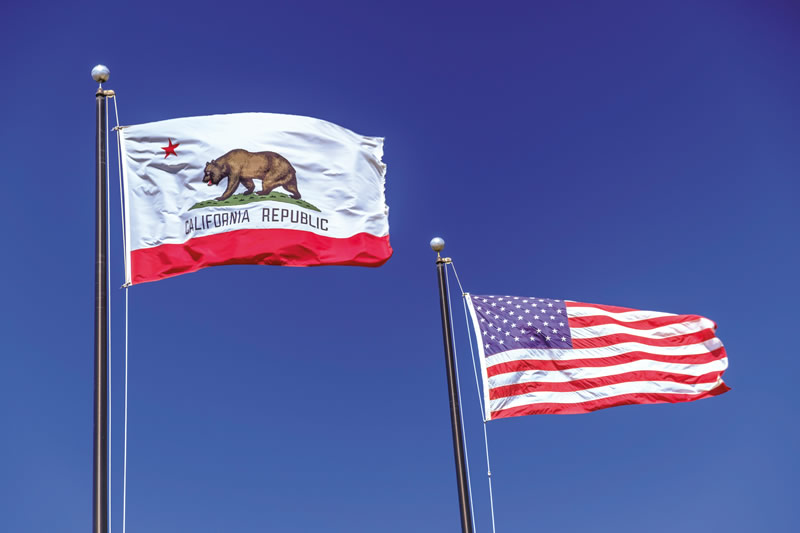 Photo by Drei Kubik on Unsplash
Here's a look at the major issues to watch in the 2026 California November election, with a particular focus on Ventura, Santa Barbara and San Luis Obispo counties.
When Is the 2026 California General Election?
The 2026 California General Election is Tuesday, November 3, 2026. California counties are mailing vote-by-mail ballots beginning October 5, and October 19 is the deadline to register to vote online for the election.
Election Day polls are open from 7 a.m. to 8 p.m. Voters can return their ballots by mail, use an official ballot drop-off location, or vote in person. A mailed ballot must be postmarked no later than November 3 and received by the county elections office by November 10.
14 California Propositions Are on the November Ballot
One of the biggest features of the 2026 election is the unusually broad range of statewide ballot questions. California voters will consider 14 propositions, covering housing, state finances, taxes, election rules, healthcare, medical research and environmental review.
The propositions on the November 3 ballot are Proposition 1 through Proposition 5 and Proposition 37 through Proposition 45. The numbering gap reflects measures that did not qualify for the final ballot rather than a mistake in the ballot numbering.
Here are the major subjects voters will encounter:
- Proposition 1: $11.25 billion in state bonds for housing affordability programs and veterans' housing.
- Proposition 2: Changes to California's rules for building state budget reserves.
- Proposition 3: Makes the existing higher income-tax rates on high-income Californians permanent.
- Proposition 4: Allows state and local governments to establish public campaign-financing programs under specified rules.
- Proposition 5: Changes how vacancies are filled following certain statewide recall elections.
- Proposition 37: Creates a state loan program for eligible middle-income buyers of qualifying newly constructed homes.
- Proposition 38: Authorizes $8.4 billion in bonds for immunology and immunotherapy research.
- Proposition 39: Establishes additional government-issued identification requirements for voting.
- Proposition 40: Creates a one-time tax of up to 5% on certain taxpayers and trusts with covered assets above $1 billion.
- Proposition 41: Establishes auditing requirements for programs funded by certain state special taxes and changes how some taxes interact with the state spending limit.
- Proposition 42: Prohibits certain new state taxes on personal property and certain retroactive taxes.
- Proposition 43: Changes the vote requirement for certain local government taxes.
- Proposition 44: Requires certain nonprofit community health clinics to spend at least 90% of revenue on qualifying program services.
- Proposition 45: Changes environmental review procedures for certain housing, transportation, water, healthcare and clean-energy projects.
Not every proposition is likely to have the same impact on 805 residents, but several stand out because of their potential effects on housing, taxes, development, local government and public services.
Housing Affordability Is a Major Election Issue
Housing is one of the most important issues facing California, and it is particularly significant in the 805 region and other areas of California, where high home prices and rents affect families, workers, young adults, retirees and local businesses.
Proposition 1 would authorize $11.25 billion in state general obligation bonds for housing-related programs. The funding includes money for affordable multifamily housing, affordable homeownership, housing infrastructure, farmworker housing, student housing, tribal housing and veterans' home loans.
The measure includes $10 billion in bonds for state housing programs that would be repaid from the state General Fund, along with $1.25 billion in veterans' housing bonds that would be repaid through veterans' home-loan payments. The Legislative Analyst estimates that repaying the $10 billion General Fund-supported portion would cost approximately $500 million to $600 million annually for about 25 years.
Another major housing proposal is Proposition 37. It would authorize up to $25 billion in revenue bonds to create a homebuying assistance program for qualifying middle-income Californians purchasing eligible newly constructed homes. The program could provide loans covering up to 17% of the purchase price, subject to eligibility requirements and county-specific home-price limits.
Housing is especially relevant throughout the 805 region and other areas of California, where communities are dealing with the competing pressures of affordability, limited land, transportation, water availability, environmental restrictions and the need for housing near employment centers.
Taxes and California's High Cost of Living
Taxes and the overall cost of living will also be major themes in the 2026 election.
Proposition 3 would make permanent the higher California income-tax rates on high-income taxpayers that are currently scheduled to expire in 2031. The measure is estimated to maintain between $5 billion and $15 billion in annual state income-tax revenue, although the amount would fluctuate substantially from year to year depending on economic conditions and high-income taxpayers' earnings.
Proposition 40 takes a very different approach. It would impose a one-time tax of up to 5% on certain individuals and trusts with covered assets valued above $1 billion. The measure excludes certain categories of assets, including real property and some retirement accounts, and would direct most of the revenue toward healthcare and the remainder toward food assistance or education-related programs.
Propositions 41 and 42 are also part of the broader debate over California's tax structure and spending limits. Proposition 41 would add auditing requirements for certain state special taxes and change how some new taxes interact with the state's spending limit. Proposition 42 would prohibit certain new state taxes on personal property and certain retroactive taxes.
CEQA and Development Could Be a Big California Issue
Proposition 45 could be one of the most consequential propositions for future development in the 805 region and other areas of California.
The measure would change portions of the California Environmental Quality Act, commonly known as CEQA, for specified categories of projects. The proposal includes faster environmental-review procedures and tighter deadlines for certain legal challenges involving projects such as housing, transportation, water, healthcare and clean-energy developments.
The Legislative Analyst says the measure would change how agencies evaluate alternatives and how courts review certain challenges to covered projects. Supporters and opponents have sharply different views about whether the proposal would help California build needed housing and infrastructure faster or reduce opportunities for environmental and community review.
This issue has particular significance in the 805. Development decisions in Ventura, Santa Barbara and San Luis Obispo counties can involve agricultural land, coastal resources, water supplies, wildfire risks, open space and transportation infrastructure.
Election Rules and Voter Identification
Proposition 39 would make significant changes to California's voting requirements. It would require voters casting ballots in person to present government-issued identification and would establish identification-number requirements for vote-by-mail ballots. The measure would also require annual reporting regarding verification of voter citizenship status.
The proposal has made election security and voter access major topics in the 2026 campaign. A yes vote would create additional identification requirements, while a no vote would leave California's current voter-identification system in place.
Because elections are administered at the county level, any statewide change to election procedures would affect election offices throughout the 805, including Ventura, Santa Barbara and San Luis Obispo counties.
Local Government Taxes and Services
Proposition 43 could affect how California communities raise money for local services.
The measure would require a two-thirds vote of local voters for certain local government taxes. Under current rules, some local taxes can be approved by a majority of voters.
The issue matters locally because cities, counties and special districts rely on voter-approved revenues for a variety of public services. Changes to the vote threshold could affect how easily local communities can approve new or extended taxes to fund services and infrastructure.
For 805 voters, that means Proposition 43 could be relevant well beyond Sacramento. Local governments throughout Ventura, Santa Barbara and San Luis Obispo counties regularly face decisions about public safety, roads, infrastructure, community facilities and other services.
Healthcare and Medical Research
Healthcare is another significant theme on the statewide ballot.
Proposition 44 would require certain nonprofit Federally Qualified Health Centers and community clinics to spend at least 90% of their revenue on qualifying program services. The measure includes enforcement provisions and allows the state to waive the requirement in certain exceptional circumstances.
Proposition 38 would authorize $8.4 billion in state general obligation bonds for immunology and immunotherapy research. The Legislative Analyst estimates that repaying the bonds would cost the state about $500 million annually for 25 years.
Healthcare access is an important regional issue in the 805, where residents live in large coastal cities as well as smaller and more rural communities. The availability and cost of healthcare can be particularly important for seniors, families and residents who live farther from major medical centers.
California's State Budget and Rainy Day Fund
Proposition 2 addresses how California builds its budget reserves and pays down certain state debts.
A yes vote would change the rules governing California's rainy-day fund and require the state to make additional debt payments for a longer period. The goal is to increase the state's reserves and strengthen its ability to manage future budget downturns.
While the issue may sound less immediate than housing or taxes, the state budget affects funding for education, healthcare, transportation, public safety and other programs that reach communities throughout the 805 and other areas of California.
The Governor's Race
The race for California governor is another major statewide contest in 2026.
The certified November ballot lists Xavier Becerra, the Democratic candidate, and Steve Hilton, the Republican candidate, for governor. The Secretary of State's official voter guide lists both candidates but notes that neither submitted a candidate statement for inclusion in the guide.
The governor has broad influence over the state budget, legislation, executive agencies, appointments and California's response to emergencies. The outcome therefore could influence policy on housing, homelessness, taxes, public safety, environmental regulations, healthcare and infrastructure throughout the 805 region and other areas of California.
Congressional and State Legislative Races
The November election also includes all 52 of California's U.S. House seats, 20 odd-numbered California State Senate districts and all 80 State Assembly districts.
For 805 voters and other areas of California, congressional and state legislative races can be especially important because federal and state lawmakers influence issues such as transportation funding, agriculture, water, housing, federal lands, healthcare, taxes and disaster assistance.
Voters should check their current district before researching candidates because district boundaries can change, and the 2026 election includes congressional districts established under California's current redistricting framework.
Local Elections Matter in the 805 Region of California
While statewide issues tend to receive the most attention, some of the decisions closest to home will be made in local races.
Ventura County
Local elections are taking place in communities throughout Ventura County. In the City of Ventura, voters in Districts 1, 4, 5 and 6 will elect four City Council members to four-year terms on November 3.
Oxnard voters will elect City Council members in Districts 1, 2 and 5. Oxnard's ballot also includes Measure E, which concerns renewal of an existing voter-approved one-half-cent local sales tax.
Other Ventura County communities have their own local contests and measures. Because the local portion of the ballot varies by address, voters should review their individual ballot rather than relying on a general list of local races.
Santa Barbara County
Santa Barbara County will also have a combination of statewide, congressional, legislative and local contests.
In the City of Santa Barbara, voters will elect a mayor and City Council representatives for Districts 4, 5 and 6 on November 3.
Other communities in Santa Barbara County have their own municipal elections and local measures. For example, Lompoc voters will elect a mayor and City Council members from Districts 2 and 3.
Local issues can include taxes, development, public services and city government, making it important for residents to review the local portion of their ballot in addition to the statewide propositions.
San Luis Obispo County
San Luis Obispo County voters will also decide local races and measures in addition to the statewide ballot.
One notable change involves the City of San Luis Obispo. Beginning with the November 2026 election, City Council members will be elected using a citywide single-vote system. Each voter selects one candidate, and the two candidates receiving the most votes are elected. The mayoral election remains unchanged.
San Luis Obispo County's November ballot also includes local measures in communities including Grover Beach, Arroyo Grande, Pismo Beach and Paso Robles, as well as a measure involving the Allan Hancock Joint Community College District. The county elections office notes that a previous version of the Hancock measure was removed and replaced by the measure now designated H-26.
Housing, Water and Wildfire Are Especially Important to California
Some of the most important issues for the 805 do not appear as individual statewide propositions.
Housing affordability remains a major concern throughout the region. Ventura County, Santa Barbara County and San Luis Obispo County all face different versions of the same challenge: providing housing that workers and families can afford while balancing development with infrastructure, environmental considerations and community character.
Water is another long-term concern. The region includes agricultural communities as well as growing cities, making water supply, conservation, groundwater management and infrastructure important local and state policy questions.
Wildfire preparedness and recovery are also major concerns across portions of the 805. State decisions involving insurance, forest and vegetation management, emergency response, infrastructure and housing can have direct consequences for communities affected by wildfire risk.
Transportation is another regional issue. Highway 101, Highway 126, Highway 154, Highway 166 and other major transportation routes connect communities throughout the 805, while local governments continue to face questions about road maintenance, congestion, public transit and infrastructure funding.
What Should California Voters Watch in November?
For residents of Ventura, Santa Barbara and San Luis Obispo counties, the most consequential election topics are likely to include:
- Housing affordability and homeownership
- Taxes and the cost of living
- Environmental regulations and CEQA reform
- State and local government spending
- Healthcare access and funding
- Election administration and voter identification
- Local government taxing authority
- Wildfire preparedness and recovery
- Water supply and infrastructure
- Transportation and road funding
- Education funding
- Homelessness and public safety
- Economic development and jobs
- Who represents the region in Sacramento and Washington, D.C.
How to Prepare for the November 2026 Election
California voters do not have to wait until Election Day to vote.
Vote-by-mail ballots are being distributed beginning October 5, and official ballot drop-off locations are scheduled to open by October 5. The last day to register to vote online is October 19, although eligible Californians can use conditional voter registration after the regular registration deadline.
Before voting, 805 residents should review both the statewide portion of the ballot and the local races and measures specific to their address. A voter in Ventura may have a different local ballot from someone in Oxnard or Thousand Oaks, just as a voter in Santa Barbara may have a different ballot from someone in Lompoc or Goleta.
Voters can use the California Secretary of State's official election resources and their county elections office to confirm registration, find voting locations, review ballot information and obtain the latest election information.
The 2026 Election Could Have a Lasting Impact on California
The November 3, 2026 election is about much more than the presidential-style politics that often dominate election coverage. California voters will be deciding questions involving housing, taxes, government spending, election rules, environmental review, healthcare and the state's future financial priorities.
For the 805, those statewide decisions intersect with some of the region's most pressing local concerns, including housing affordability, water, wildfire preparedness, transportation, economic development and the cost of providing local services.
As Election Day approaches, voters across Ventura, Santa Barbara and San Luis Obispo counties should take the time to review their complete ballot and understand the candidates and measures that will directly affect their communities.
In 805 will continue to follow the California election issues and local races that matter to residents throughout Ventura, Santa Barbara and San Luis Obispo counties.
Official Election Resources
For the most current and authoritative information, voters should consult the California Secretary of State's official November 3, 2026 General Election resources, the California Official Voter Information Guide, the Legislative Analyst's Office proposition analyses, and their county elections office.
Sources
- California Secretary of State — November 3, 2026 General Election
- California Official Voter Information Guide — 2026 Propositions
- California Legislative Analyst's Office — November 3, 2026 Propositions
- City of Ventura — November 3, 2026 Election
- City of Oxnard — 2026 General Municipal Election
- City of Santa Barbara — Elections
- City of Lompoc — Election Information
- San Luis Obispo County — November 3, 2026 General Election
The information provided in this article is for general informational purposes only. While we strive to keep our content accurate and up to date, information may change over time. Readers should verify important details with official or authoritative sources before making decisions based on this information.
Published October 7, 2026, In 805 Media (in805.com)